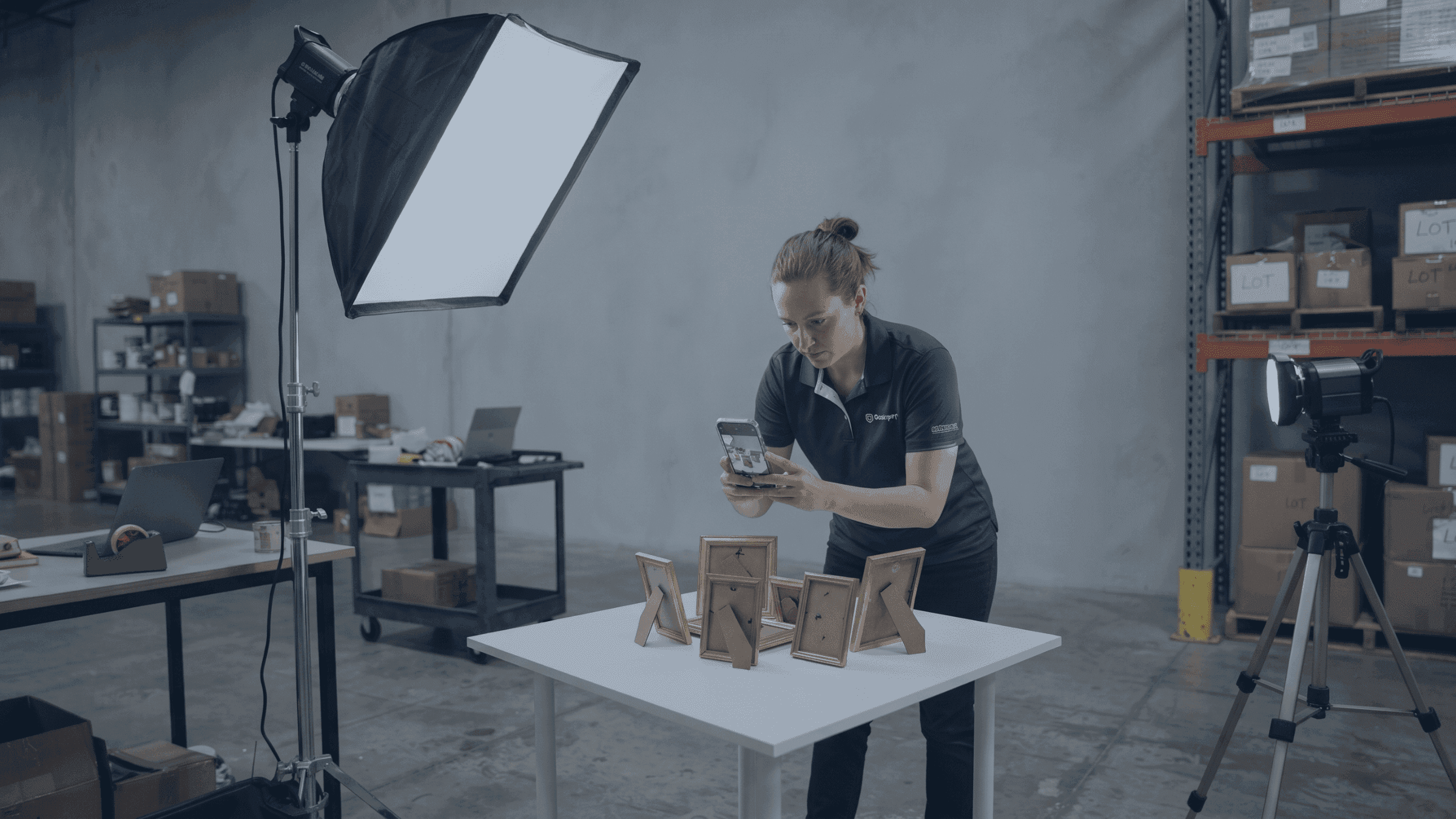
When you're selling through an online auction, bidders can't always pick up an item and look it over before deciding whether to bid.
Your photos have to do some of that work for them.
Good auction photography doesn't require an expensive camera or professional studio. It requires clear, useful photos that help bidders understand exactly what they're looking at.
Better photos can give bidders more confidence, answer questions before they're asked and help your listings stand out.
Here are a few tips from the Equip-Bid team.
1. Start with a clear main photo
Your first photo is your first impression.
Make sure the item is easy to identify and isn't hidden behind clutter.
Whenever possible:
- Center the item
- Fill most of the frame
- Use good lighting
- Keep the background relatively clean
- Avoid taking the photo from too far away
Ask yourself:
If I were scrolling through an auction, would I immediately know what's being sold?
If not, take another shot.
2. Take more than one photo
One photo rarely tells the whole story.
Give bidders multiple angles so they can get a better understanding of the item.
Photograph the:
Front. Back. Sides. Top. Inside.
Not every item needs every angle, but bidders shouldn't have to guess what the other side looks like.
For equipment, furniture, appliances and higher-dollar merchandise, more useful photos can make a big difference.
3. Show the actual item
Stock photos can be useful for helping bidders identify a product, especially with retail merchandise.
But don't rely on them alone.
If you use a stock photo, include clear photos of the actual item too.
Bidders want to see the merchandise they'll actually be picking up.
Show the packaging.
Show the condition.
Show what's included.
Show what makes this specific item different from a brand-new one sitting on a retailer's shelf.
4. Photograph the flaws
This one matters.
If there's a scratch, dent, crack, missing piece or other visible issue, take a picture of it.
Don't hide damage by choosing an angle where it can't be seen.
A bidder discovering a dent in a photo before bidding is much better than a winning bidder discovering it for the first time at pickup.
Transparency builds trust.
And trust helps create a better marketplace for everyone.
5. Get close enough to show important details
Sometimes the most useful photo isn't the prettiest one.
Take close-ups of things bidders may want to see, such as:
- Model numbers
- Serial numbers when appropriate
- Control panels
- Labels
- Connections
- Tires
- Engine hours
- Odometers
- Tool condition
- Manufacturer information
- Included accessories
- Areas of wear or damage
Think about the questions you would have if you were considering buying the item.
Then try to answer some of them with your camera.
6. Show what's included
If you're selling a tool with two batteries and a charger, photograph the tool, both batteries, and the charger.
If you're selling equipment with attachments, show the attachments.
If you're selling a group of items as one lot, give bidders a clear look at the entire group.
Bidders should bid based on what the listing says and shows, not what a product normally comes with at retail.
Clear photos help remove that uncertainty.
7. Use good lighting
You don't need professional lighting equipment.
You do need enough light to see the item.
Avoid extremely dark photos, harsh shadows or bright light directly behind the merchandise.
Natural light can work well when available.
Before moving on, look at the photo on your screen.
Can you clearly see the condition and details?
If you're struggling to see them, bidders probably will too.
8. Keep your camera steady
Blurry photos don't help anyone.
Hold your phone or camera steady and give it a moment to focus before taking the picture.
Afterward, zoom in and check the image.
If the model number is unreadable or the entire item is blurry, retake it.
It takes a few extra seconds and can make the listing much more useful.
9. Use video to show functionality when it matters
Some items can benefit from more than still photos.
If you're listing a machine, piece of equipment, power tool or another item where functionality matters, consider taking a video of it turned on and running.
Showing a machine operating can give bidders valuable information and more confidence about what they're bidding on.
But there's an important rule:
If you show an item working in the video, bidders should expect it to work that way at pickup unless the description clearly states otherwise.
Don't show a machine running and then leave out a known issue that affects how it operates.
If it starts but shuts off after five minutes, say that.
If one function works but another doesn't, say that.
If something changes after you record the video but before the auction ends, update the listing accordingly.
Photos, videos and descriptions all help set expectations for the bidder. Make sure they accurately represent what the bidder should expect when they arrive at pickup.
If you show it working, it needs to work. If there's more to the story, put it in the description.
10. Think like a bidder
Before you finish the listing, look through your photos and videos as if you've never seen the item before.
Ask yourself:
Can I tell exactly what's being sold?
Can I see the actual item clearly?
Can I understand its condition?
Are any known flaws visible?
Can I tell what's included?
If I showed it running, does that accurately represent how it operates?
Would I want another angle before bidding?
If you're left with questions, there's a good chance a bidder will be too.
Take the extra photo.
Photos and descriptions should work together
Great photos don't replace a good description.
And a good description shouldn't be expected to make up for poor photos.
Use both.
If there's a known issue, show it and describe it.
If an accessory is included, make that clear.
If something bidders might normally expect is not included, don't create confusion by implying that it is.
And if a photo or video shows something that could reasonably affect a bidder's expectations, make sure the description doesn't tell a different story.
The goal isn't to make every item look perfect.
The goal is to represent the item accurately.
That helps bidders make informed decisions and creates a smoother experience all the way through pickup.
Clear photos build bidder confidence
You don't need to turn every auction listing into a professional product shoot.
Keep it simple.
Good lighting.
Clear angles.
Actual-item photos.
Close-ups where they matter.
Honest photos of damage or wear.
A clear look at what's included.
Video when it helps to show an item running.
Put yourself in the bidder's shoes and give them the information you'd want before spending your own money.
Better listings start with better information.
And sometimes, that starts with taking one more photo.